
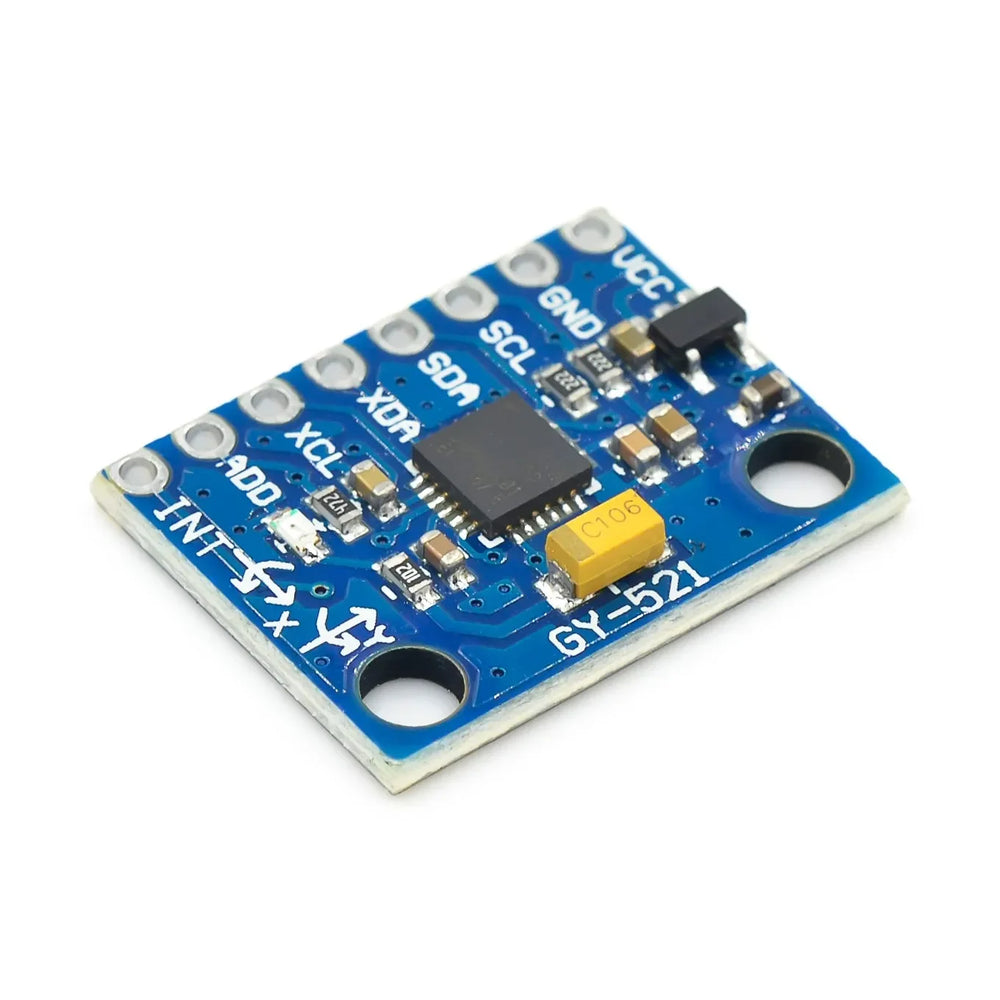
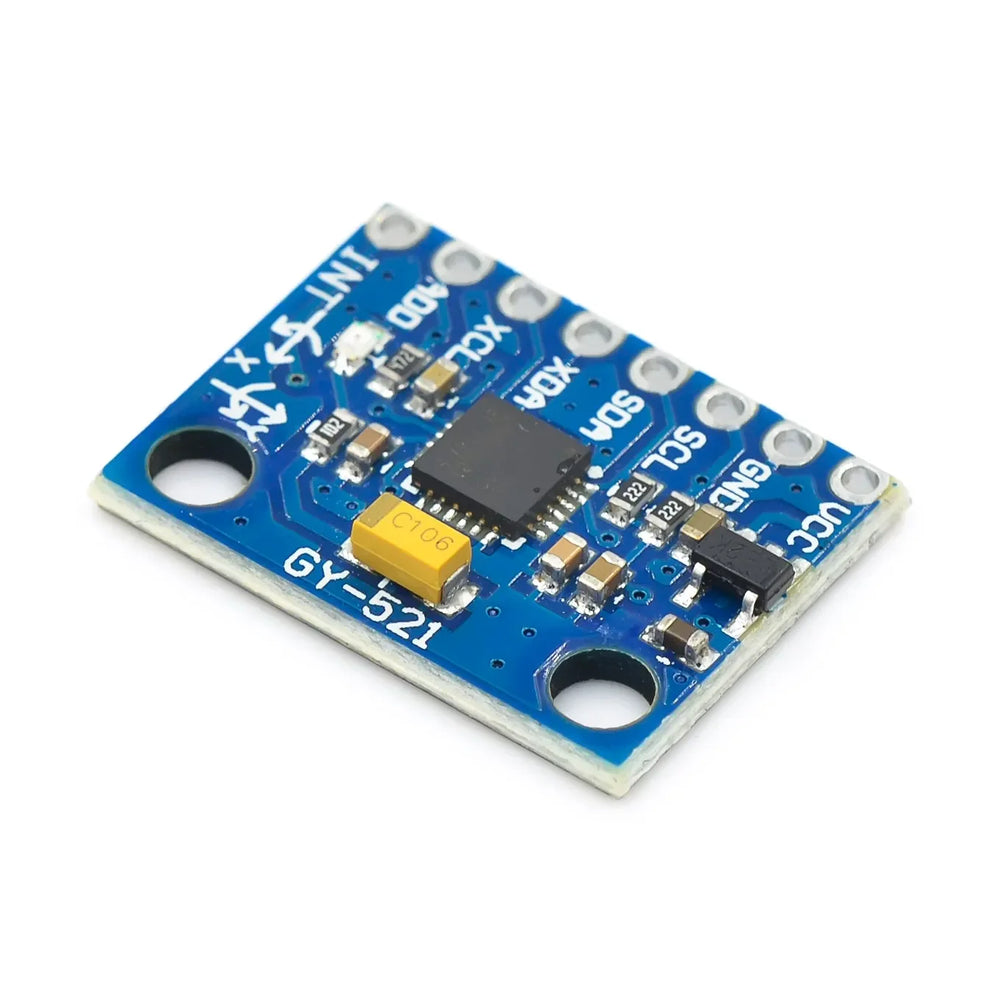
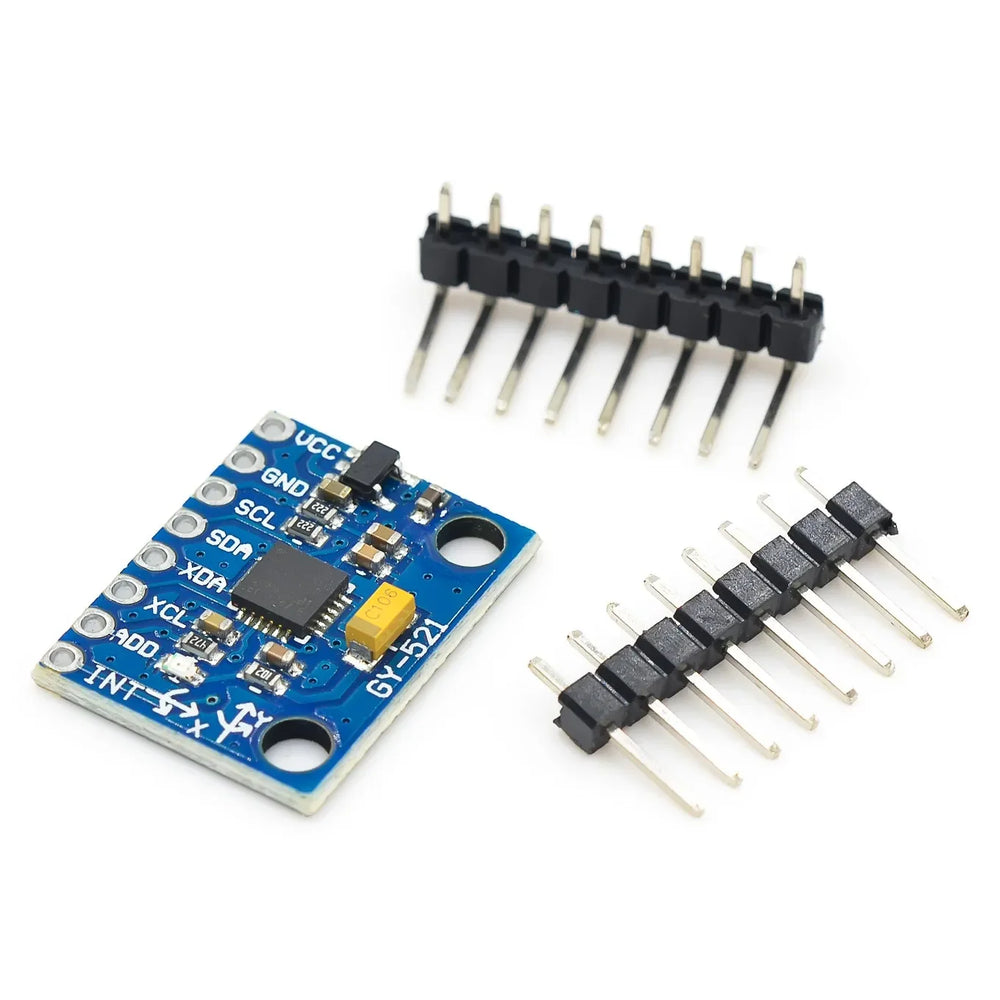
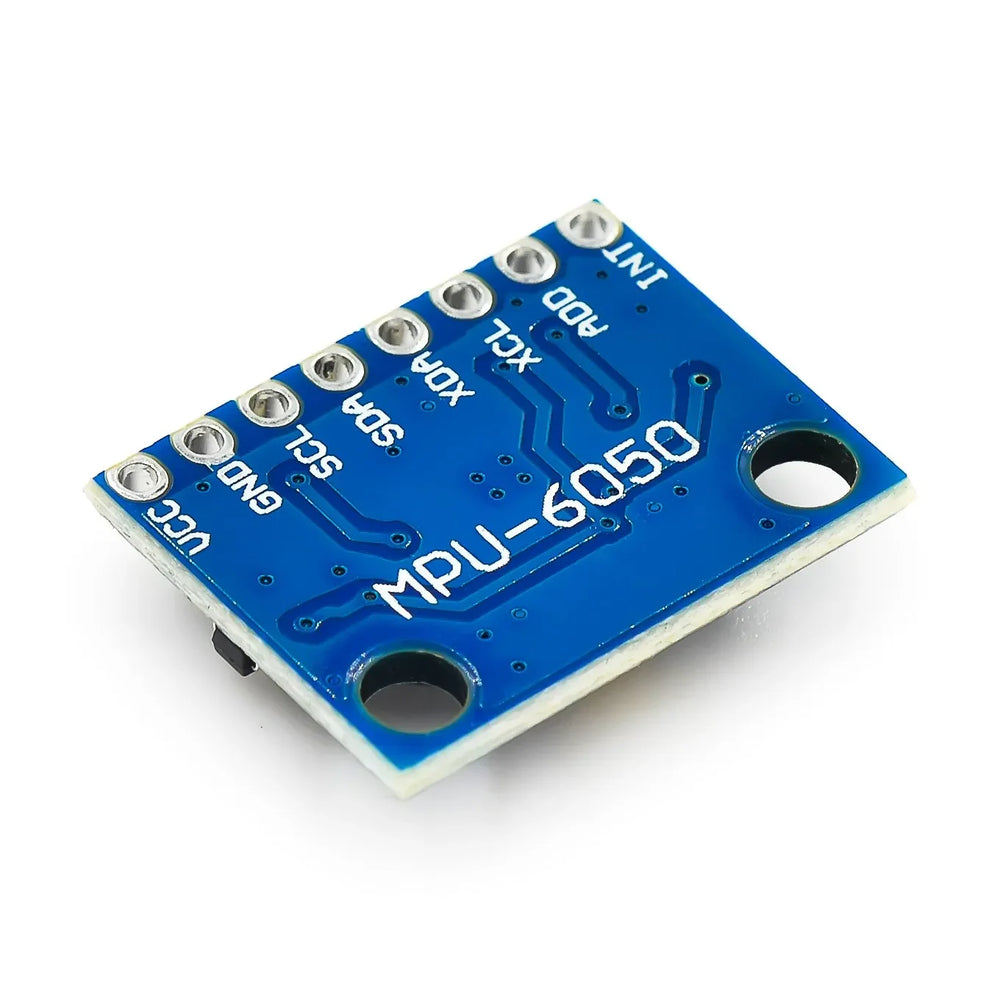
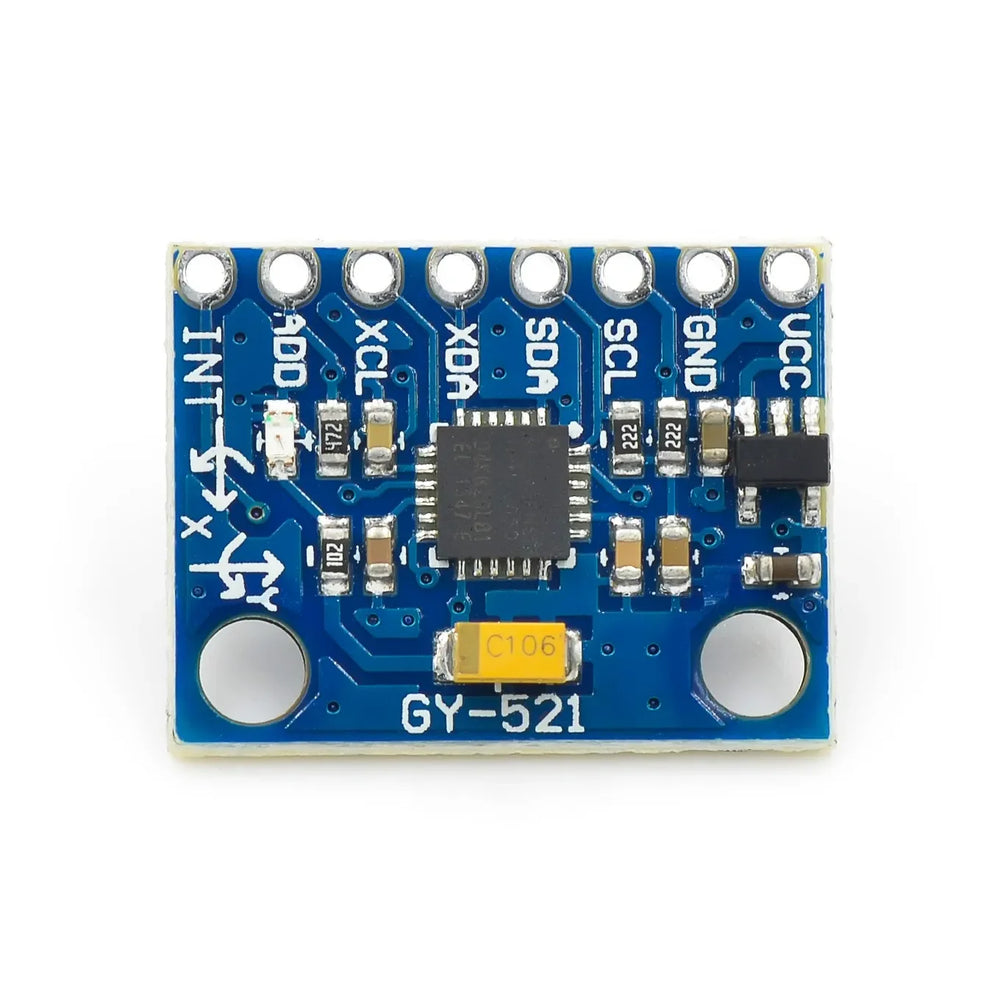
MPU-6050 3-Axis Gyro & Accelerometer Sensor
MPU-6050 3-Axis Gyro & Accelerometer Sensor has a 5-10 day lead time before dispatch. Order will only be sent once all items are available for delivery.
MPU-6050 3-Axis Gyro & Accelerometer Sensor
The MPU-6050 (GY521) module is a MEMS sensor combining a 3-axis accelerometer and a 3-axis gyroscope. It provides precise motion and orientation data, making it ideal for Arduino and ESP32 robotics, drones, wearable devices, and stabilization projects. Perfect for building a motion-controlled robot or a drone flight stabilizer, as the MPU-6050 is a compact, high-accuracy sensor ready to integrate into your projects.
Features & Specifications
- Power Supply: 3V–5V with internal low-dropout regulator
- Communication: I²C protocol, compatible with Arduino, ESP32, and Raspberry Pi
- Built-in ADC: 16-bit analog-to-digital conversion for high-precision measurements
- Gyroscope Range: ±250°/s, ±500°/s, ±1000°/s, ±2000°/s
- Acceleration Range: ±2g, ±4g, ±8g, ±16g
- Dimensions: 21mm x 16mm
- Pin Pitch: Standard 2.54mm for easy interfacing
Getting Started with Arduino or ESP32
Looking for how to use the MPU-6050?. Follow these steps to get started quickly:
- Connect SDA and SCL to your microcontroller’s I²C pins. Check your board’s I²C pinout, see our Arduino I²C reference guide.
- Connect VCC to 3.3–5V and GND to ground.
- Use libraries such as Wire for Arduino/ESP32 or SMBus for Raspberry Pi to read sensor data.
- Verify the I²C address (default 0x68), especially if multiple sensors are on the same bus.
Tips & Troubleshooting
- If sensor readings appear unstable, check that power is stable and wiring connections are solid.
- Ensure the correct board and library settings are selected in your code.
- If using multiple MPU-6050 sensors, each must have a unique I²C address or be on a separate bus.
- Consult our Arduino Getting Started Guide for basic setup and testing examples.
Related Products
- ADXL345 - Triple-Axis Accelerometer (+-2g/4g/8g/16g) w/ I2C/SPI - STEMMA QT / Qwiic
- Adafruit MPU-6050 6-DoF Accel and Gyro Sensor - STEMMA QT Qwiic
- Adafruit LIS3DH Triple-Axis Accelerometer (+-2g/4g/8g/16g)
With proper setup, the MPU-6050 provides accurate motion data for robotics, stabilization systems, wearable devices, and other motion-sensitive projects. Even without an MPU-6050-specific guide, this micro-guide ensures you can get started quickly and reliably with your Arduino or ESP32.
This product can be found here:
